- Environmental enrichment lowers stress signs in indoor cats (Buffington et al., 2006).
- AAFP and ISFM define five pillars of a healthy feline environment.
- Puzzle feeders and play sessions satisfy the predatory sequence.
- Hiding boxes reduce stress in shelter cats.
- Sudden litter box changes require a veterinary visit.
Introduction
Cat enrichment research shows that environmental modification reduces stress-related illness and problem behavior in indoor cats. Ohio State University researchers (Buffington et al., 2006 found that multimodal environmental modification (MEMO) lowered urinary signs and fearfulness in cats with feline idiopathic cystitis. The 2013 AAFP and ISFM Feline Environmental Needs Guidelines turned this evidence into five pillars that define a healthy home for a cat.
Indoor cats sleep through long stretches of an unstimulating day, and owners cannot tell whether their setup meets the cat’s needs. This article maps each major study from cat behavior research to a specific change you make at home, from cat environmental enrichment basics to indoor cat enrichment by household type.
What Does Research Say About Cat Enrichment?
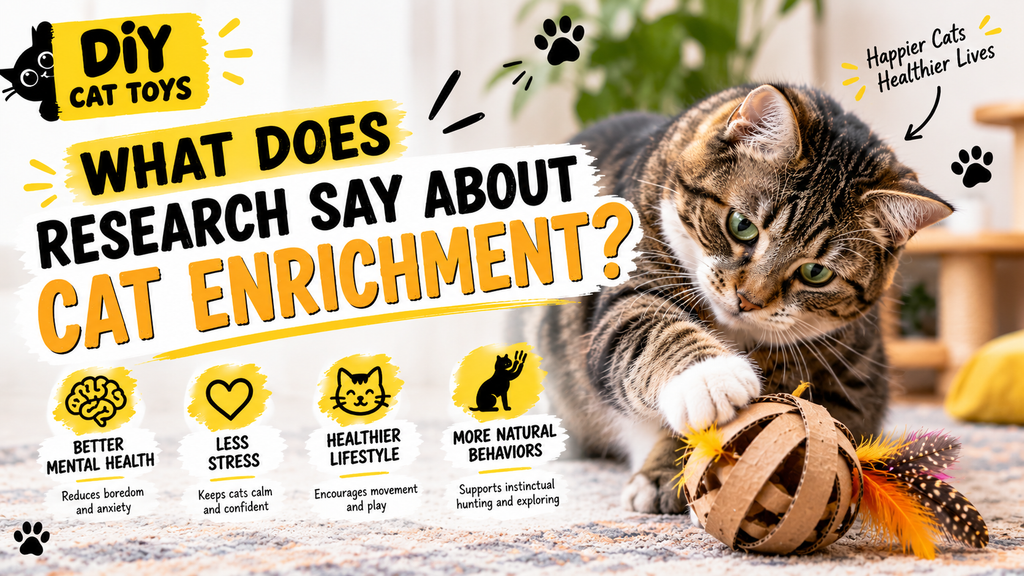
Cat environmental enrichment means modifying living space to meet species-specific behavioral needs. The 2013 AAFP/ISFM guidelines (Ellis et al., Journal of Feline Medicine and Surgery) set five pillars, and the science behind cat enrichment starts there. Enrichment is a welfare standard, not a luxury.
The Five Pillars of a Healthy Feline Environment
| Pillar | Meaning | Home example |
| Safe place | The cat retreats from perceived threats | Covered bed on a high shelf |
| Multiple, separated resources | Food, water, litter, rest, and scratching sit apart | Water bowl in the kitchen, litter box in the bathroom |
| Play and predatory behavior | The cat hunts, even without prey | Daily wand toy session |
| Consistent human interaction | The cat predicts and controls contact | Same feeding and play times each day |
| Respect for scent | The cat keeps its own scent marks | Scratching posts left in place |
Separated resources means food, water, litter, rest, and scratching spots in different locations. These five categories cover feline environmental needs in a form an owner audits room by room.
Why Do Cats Need Enrichment?
Domestic cats retain wildcat predatory biology, so a food bowl alone leaves needs unmet. Wildcat ancestors hunt repeatedly across the day. Indoor confinement removes hunting, climbing, and territory patrol, and enrichment for cats replaces those outlets. Read more in Cat Behavior Basics: Why Cats Scratch, Hide, and Hunt.
Does Environmental Enrichment Reduce Cat Stress?
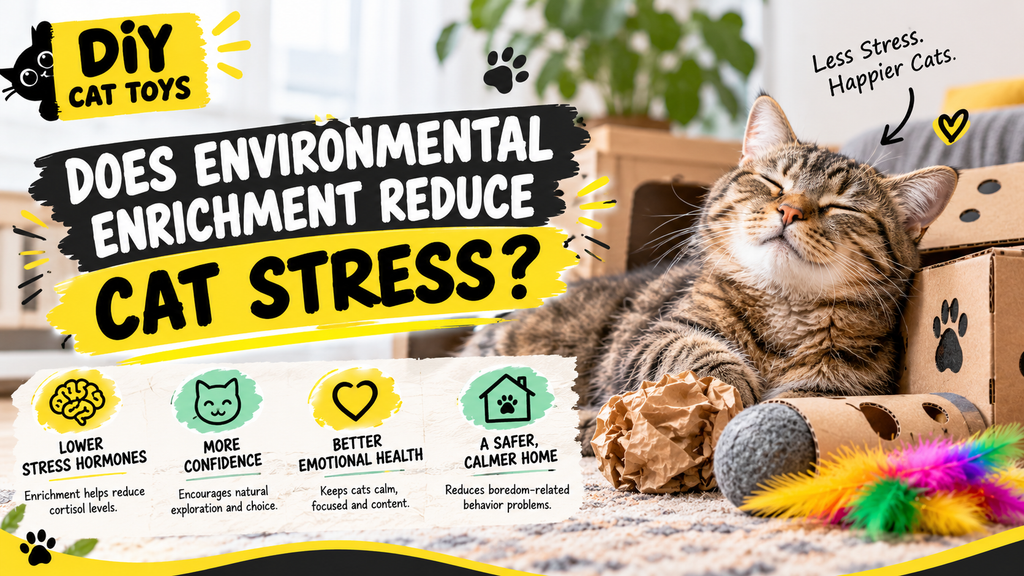
Chronic stress elevates cortisol and links to urinary, skin, and behavioral problems. Cat stress reduction through enrichment is documented in two groups: cats with feline idiopathic cystitis (FIC) and shelter cats. The effect does not extend to all cats by default. These studies rely on owner-reported signs and behavior scoring, which limits precision. See Signs of Stress in Cats for the observable indicators.
Feline Idiopathic Cystitis and the MEMO Study
Buffington et al. (2006) at the Ohio State University College of Veterinary Medicine enrolled 46 cats with FIC and tested MEMO. Results showed fewer urinary signs and less fearfulness, nervousness, and aggression. The study ties idiopathic cystitis and stress together, and Pandora syndrome names the wider stress-linked pattern. These findings show how to reduce cat stress in cats with this diagnosis.
Safety note: Straining to urinate, frequent litter box trips with little output, or blood in urine in a male cat is an emergency (possible urethral obstruction). Go to an emergency vet immediately. Enrichment does not replace veterinary diagnosis.
Shelter Cat Welfare and Hiding Boxes
Vinke et al. (2014) and Kry and Casey (2007) report lower stress scores in shelter cats given hiding boxes. These cat enrichment studies on shelter cats support the safe place pillar.
How Much Play Do Cats Need? Predatory Sequence and Puzzle Feeders
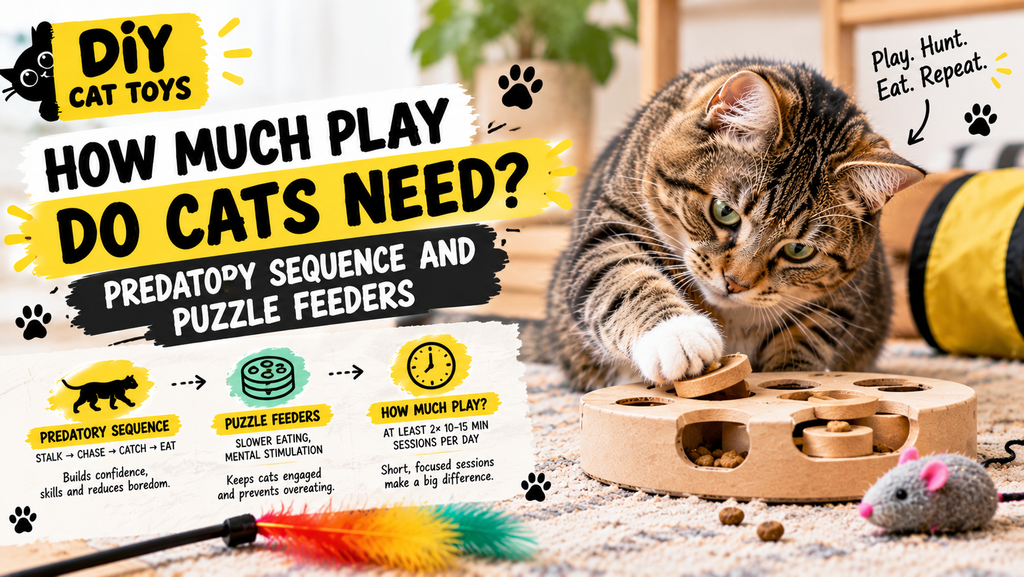
The predatory sequence stalks, chase, pounce, bite, and consume. An interactive session that completes the sequence satisfies prey drive. The working figure is 2 sessions of 10 to 15 minutes daily.
| Option | Needs met | Cost range (US$, varies by brand) | Supervision required |
| Wand toy | Full predatory sequence | $5 to $15 | Yes |
| Puzzle feeder | Foraging, slower eating | $10 to $30 | No |
| Rotating toys | Novelty, chase | $5 to $25 | Varies by toy |
| Solo ball toy | Chase, pounce | $3 to $10 | No |
Predatory Sequence and Interactive Play Sessions
Wand toy movement mimics prey, so interactive play sessions trigger stalking and chasing. End each session with a food reward to complete the sequence. This is how to satisfy a cat’s hunting instinct without outdoor access, and hunting behavior in cats responds to prey-like movement along the floor.
Safety note: Supervise string and wand toys, because ingested string causes linear foreign body obstruction. Store wands out of reach after each session.
Food Puzzle Research
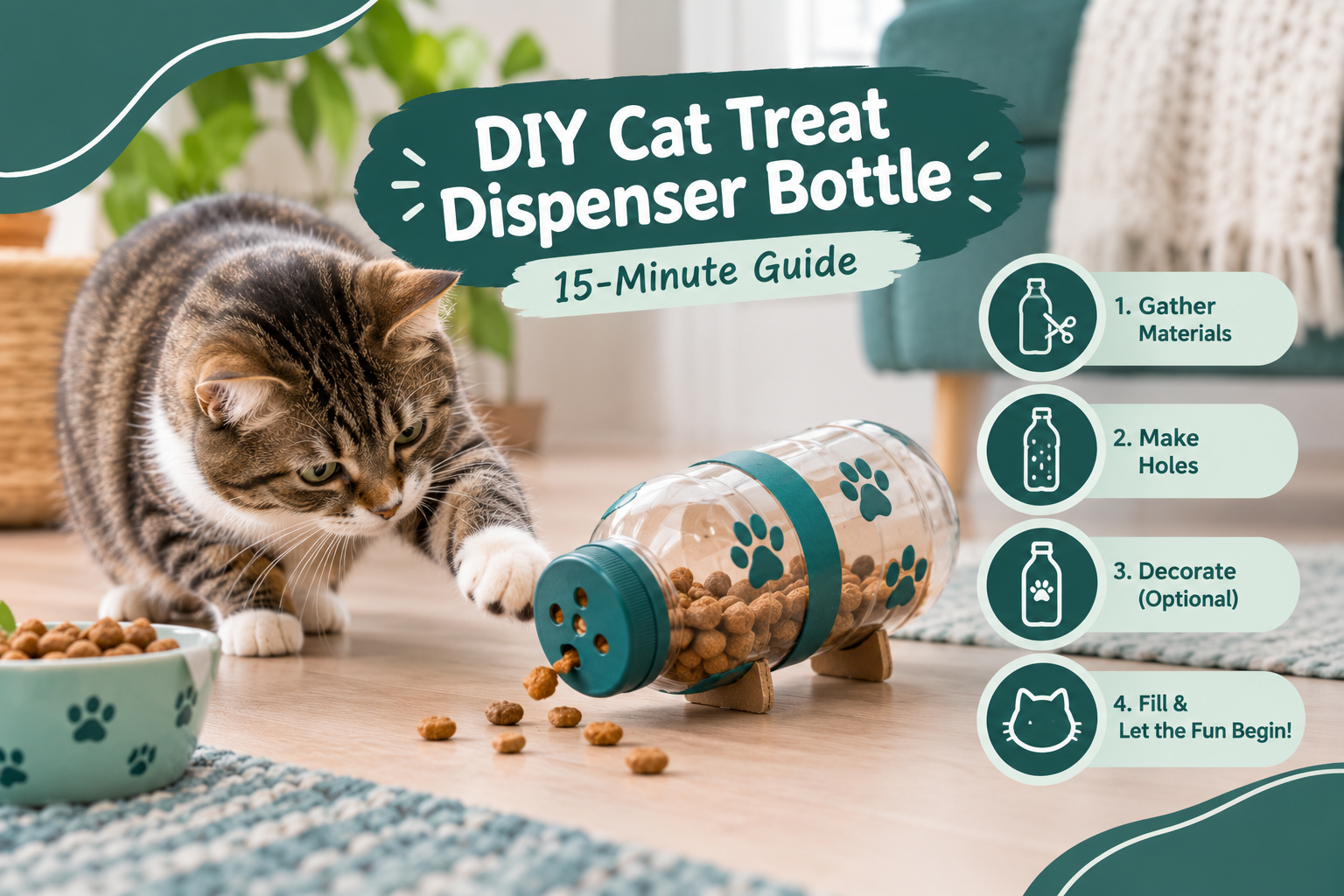
Dantas et al. (2016, Journal of Feline Medicine and Surgery) reviewed food puzzles as a feeding method for physical and mental health. Puzzle feeder benefits include added foraging effort and slower eating. Cat puzzle feeders come in 3 types: ball dispensers, tray feeders with hidden compartments, and snuffle mats. Introduce a puzzle with part of a regular meal on the easiest setting, then raise difficulty after the cat empties it. Compare models in Best Cat Puzzle Feeders Compared.
Safety note: Weigh puzzle food against the daily ration to prevent weight gain.
How Do You Know If Your Cat Is Bored?
Myth: “Cats sleep 12 to 16 hours a day, so they are content.”
Fact: Adult cats do sleep that long, and the waking hours still require stimulation. Signs of cat boredom appear in those hours:
- Destructive scratching
- Night-time vocalizing
- Overeating
- Overgrooming
- Attention-seeking attacks on ankles
Feline body language confirms the pattern: a cat that stalks ankles from a low crouch is hunting without better targets. Stereotypic behavior such as repetitive pacing or compulsive grooming signals a welfare problem and needs a vet check. Does cat enrichment prevent behavior problems? Enrichment addresses boredom-driven behavior, and medical causes such as pain and illness require exclusion first. Read Why Is My Cat Destroying Furniture? for the scratching pattern.
Safety note: Compulsive grooming, hair loss, or sudden aggression requires a veterinary exam before behavior modification.
Which Enrichment Ideas for Indoor Cats Work Best by Household Type?
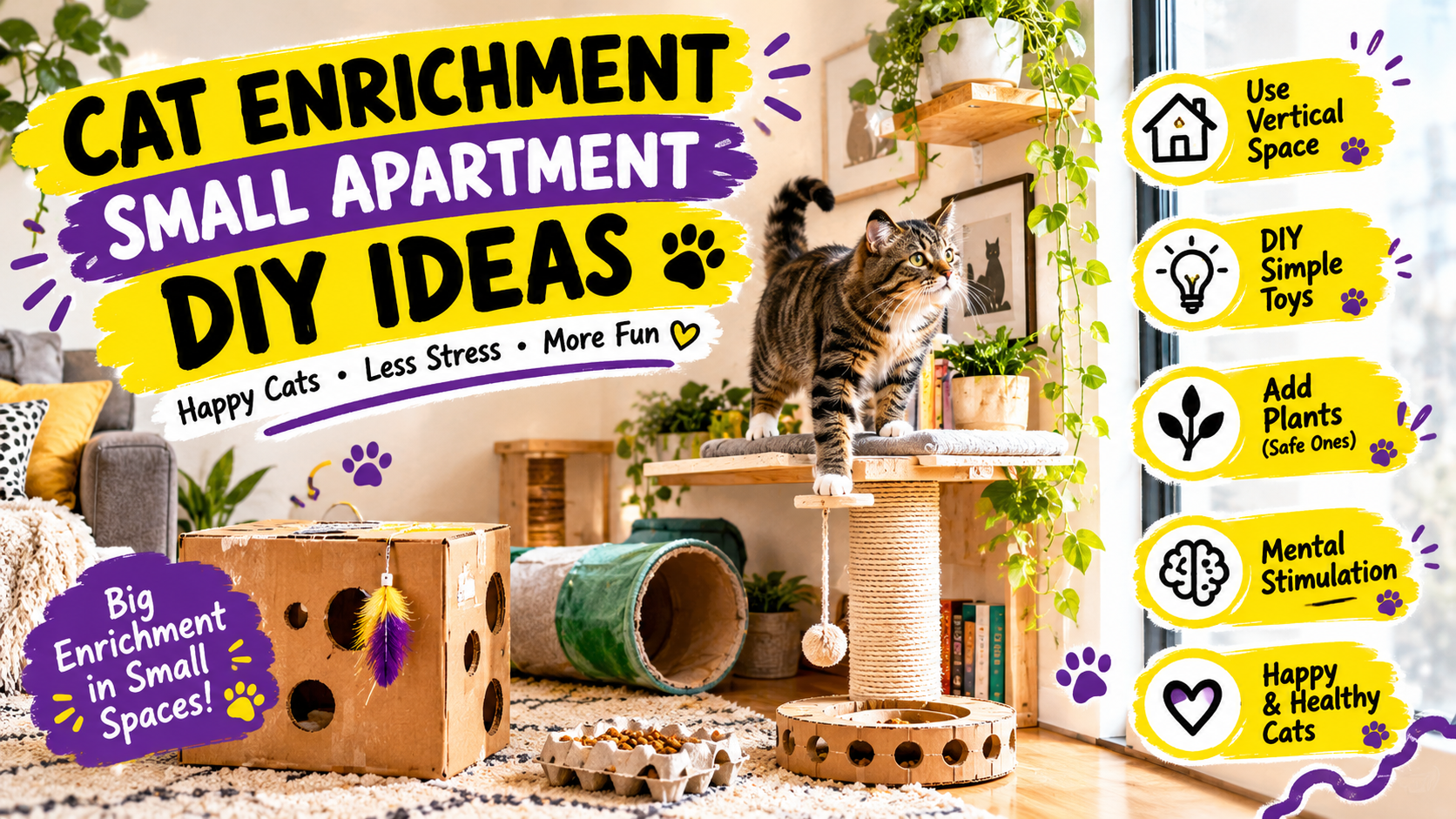
Cat enrichment ideas work best matched to the household, and the best enrichment ideas for indoor cats raise indoor cat welfare in different ways.
| Household | Enrichment ideas |
| Single-cat home | Window perches, bird feeders in view, 3 to 4 rotated toys weekly |
| Multi-cat household | One resource per cat plus one extra, placed in separate rooms to prevent resource guarding |
| Senior cat | Low-step perches, soft scratching surfaces, shorter play bursts |
| Apartment | Vertical space compensates for floor area |
Prices vary by brand and material: cat window perches typically cost $20 to $60, and cat scratching posts $15 to $100.
Vertical Space and Window Perches
Why is vertical space important for cats? Height gives cats a safe retreat, and vertical space adds usable territory in apartments. Choose cat window perches by weight rating and install them securely. Compare options in the Cat Tree Buying Guide.
Scratching Posts and Multi-Cat Households
Tall, stable posts suit scratching, and placement near sleeping areas matches where cats stretch and mark after waking. Choose cat scratching posts by material: sisal rope, sisal fabric, or cardboard. Cat enrichment for multi-cat households depends on separated resources, since multi-cat household dynamics shift when 1 resource serves 2 cats. Environmental complexity, meaning varied surfaces and heights, gives each cat its own route.
Safety note: Anchor perches and tall trees, and confirm weight ratings for large breeds such as Maine Coons.
Frequently Asked Questions About Cat Enrichment Research
What does research say about cat enrichment?
Cat enrichment research shows that environmental enrichment reduces stress signs in cats, including urinary signs in cats with feline idiopathic cystitis (Buffington et al., 2006). AAFP and ISFM define five pillars of a healthy feline environment. The evidence is strongest for cystitis and shelter populations.
How much play do cats need?
Cats need a working figure of 2 sessions of 10 to 15 minutes of interactive play daily. Kittens and young adults need more play than seniors, whose sessions run shorter. Each session ends with a food reward to complete the predatory sequence.
Are puzzle feeders good for cats?
Puzzle feeders add foraging effort and slow eating, and Dantas et al. (2016) reviewed food puzzles as a feeding method for physical and mental health. Puzzle calories count toward the daily ration, so weigh the puzzle food against the daily ration.
Does environmental enrichment reduce cat stress?
Environmental enrichment reduces cat stress in two documented groups. Buffington et al. (2006) found fewer urinary signs and less fearfulness in cats with FIC after MEMO. Vinke et al. (2014) and Kry and Casey (2007) reported lower stress scores in shelter cats given hiding boxes.
How do I know if my cat is bored?
Signs of cat boredom include destructive scratching, night-time vocalizing, overgrooming, and ankle ambushes. Each sign has medical causes too, so a veterinary exam comes first for any sudden change. Enrichment changes begin after the exam rules out illness.
Conclusion
Environmental modification is a documented, low-cost intervention, and the five AAFP/ISFM pillars address stress at its source.
A cat with safe retreats, play outlets, and separated resources shows fewer stress signs and fewer behavior problems. The effect is best documented in cats with feline idiopathic cystitis and in shelter cats, so the same changes in a healthy cat support welfare without a proven medical payoff. Start with the pillar your home covers least: add a covered retreat, schedule the 2 daily play sessions, or move the litter box away from the food.
Download the free Five Pillars Home Audit checklist and score your cat’s environment in 10 minutes.