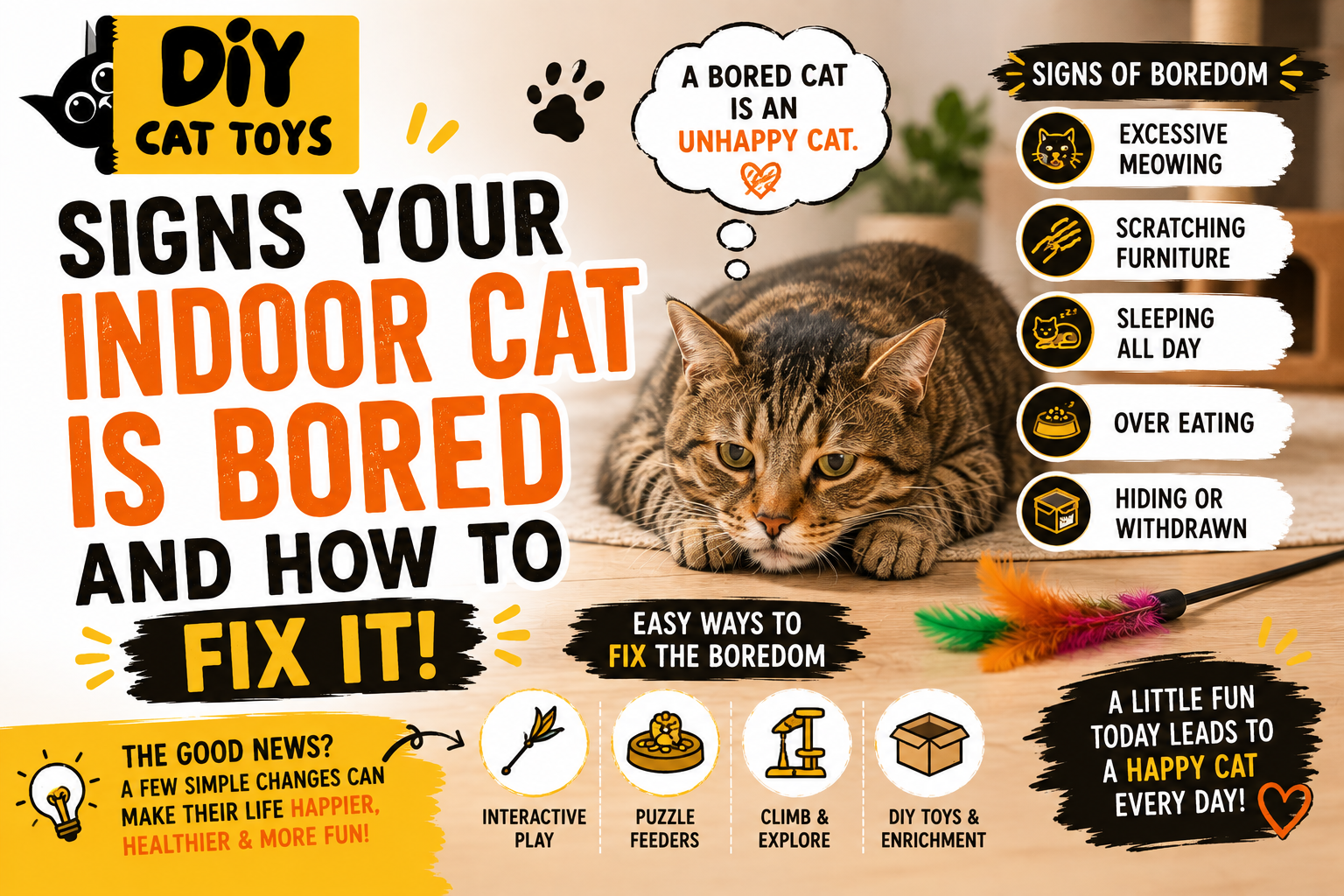
Quick Answer: Signs Your Cat Is Bored
- Indoor cats show 7 boredom behaviors: overgrooming, excessive meowing, destructive scratching, lethargy, redirected aggression, repetitive pacing, and play refusal.
- Bored cats remain alert and vocal; sick cats withdraw and stop eating.
- Adult indoor cats need 2 structured play sessions of 10 to 15 minutes each per day.
- Environmental enrichment resolves most boredom within 7 to 14 days of consistent application.
- Cats over 10 years need a veterinary evaluation before boredom is assumed.
Indoor cats display boredom through 7 measurable behaviors: excessive vocalization, overgrooming, destructive scratching, daytime lethargy, redirected aggression, repetitive pacing, and a sustained loss of interest in play. Boredom in a cat is a neurological response to chronic understimulation that blocks the feline predatory play sequence from completing, not a personality trait or sign of aging. Identifying the signs your indoor cat is bored within the first 2 to 4 weeks prevents them from hardening into compulsive disorders that require 3 to 6 months to reverse.
Most cat owners attribute bored cat behavior to aging or natural temperament and lose the 2-week window in which environmental changes produce the fastest behavioral reversal. This article names each sign precisely, separates boredom from illness and depression, and delivers a structured enrichment plan you begin the same day.
What Bored Cat Behavior Actually Looks Like
The 7 measurable signs of feline boredom each trace back to one root cause: a predatory animal prevented from completing the behavioral loops its nervous system requires. Bored cat behavior signs are not random; they map directly onto a blocked predatory play sequence.
- Excessive vocalization: Cats that meow or yowl during daylight hours without an external environmental trigger redirect hunting energy verbally. This pattern appears most in single indoor cats between ages 2 and 6. The vocalization follows a circadian arc, peaking in early morning and at dusk, not randomly through the night.
- Overgrooming: Cats that lick the same body region (typically the belly, flanks, or inner thighs) for more than 30 minutes per day beyond baseline self-grooming produce psychogenic alopecia. In its early stage, overgrooming is a stereotypic behavior, a repetitive, invariant act with no obvious function, not a dermatological condition. The Journal of Feline Medicine and Surgery (2020) identifies psychogenic alopecia as the leading dermatological presentation of feline boredom, accounting for 12% of indoor cats presenting with unexplained hair loss at veterinary dermatology clinics.
- Destructive scratching: Scratching outside designated surfaces, particularly furniture corners and door frames, signals the predatory play sequence is initiating with no physical target available to complete it on. [Destructive scratching outside designated surfaces](Cat Scratching Furniture: Causes and How to Stop It) intensifies in cats that have no food puzzle to engage during the crepuscular predatory peak.
- Daytime lethargy: Adult indoor cats sleep 12 to 16 hours per day. A cat sleeping beyond 18 hours within a 24-hour window with no change in appetite signals low stimulation, not illness, when other signs of sickness are absent.
- Redirected aggression: A bored cat ambushes owner ankles, attacks other pets without provocation, or displays dilated pupils during non-play hours. This is redirected aggression, predatory energy displaced onto a bystander when the original trigger is inaccessible, not pathological aggression.
- Repetitive pacing: A cat that walks the same room circuit or stares at walls for more than 10 consecutive minutes is engaging in proto-stereotypic behavior driven by spatial restriction. Single indoor cats living in environments under 400 square feet with no vertical space develop boredom-related stereotypic behaviors within 3 to 4 months.
- Play refusal: A cat that ignores wand toys, laser pointers, or crinkle balls it previously engaged with for 3 or more consecutive days has reached a satiation plateau caused by repetitive, unchanging stimuli, not a personality change.
Signs of boredom in house cats become clinically entrenched when owners treat each symptom as a separate personality quirk rather than as a unified signal from a predatory nervous system that is not completing its behavioral loop.
Cat Overgrooming From Boredom vs. Skin Conditions: How to Tell
Cat overgrooming from boredom separates from dermatological causes at the level of the skin itself. Examine the skin beneath the thinned coat: boredom overgrooming leaves clean, unbroken skin; allergies, parasites, or fungal infection produce red, inflamed, crusted, or scabbed skin.
Track the grooming timing: boredom overgrooming peaks between 4 and 7 PM during the crepuscular activity window, while allergy-driven scratching occurs randomly across the 24-hour cycle. A cat that stops overgrooming within 72 hours of a new enrichment input confirms a behavioral cause, not a dermatological one.
Cat Meowing Constantly Out of Boredom vs. Medical Vocalization
Cat meowing constantly out of boredom follows a predictable circadian pattern: highest in the early morning and at dusk, absent during the mid-night hours. Boredom vocalization stops within 5 minutes of a directed play session; hyperthyroidism produces constant high-pitched yowling accompanied by visible weight loss and increased appetite, and it does not stop with play.
A vet visit is required when vocalization begins in a cat over 8 years with no prior vocal history, as this pattern signals a medical condition rather than a behavioral one.
Why Indoor Cats Experience Boredom More Acutely Than Outdoor Cats
Domestic cats retain 95.6% of the genome of their wild ancestor Felis silvestris lybica (Driscoll et al., Science, 2007), including a predatory drive that requires 3 to 8 daily hunting-sequence completions for behavioral equilibrium. Indoor environments under 400 square feet with no vertical space eliminate 3 of the 6 sensory-stimulation channels cats use in outdoor environments: ground-level movement tracking, airborne scent detection from territory boundaries, and acoustic prey localization.
Indoor cat boredom is not a behavioral defect. It is a biological mismatch between an environment and the predatory species housed in it. An indoor cat needs stimulation at the rate its nervous system evolved to receive it, not at the rate a human apartment delivers it.
Single indoor cats with no other pets and a human absent for 8 or more hours per day reach behavioral understimulation thresholds 40% faster than cats in multi-pet households, based on veterinary behavioral clinic intake data. A cat bored at home in a single-occupancy apartment registers the absence of territorial competitors, prey movement, and novel scent inputs simultaneously.
Neutered and spayed cats retain identical predatory drive to intact cats; reproductive status has no effect on enrichment requirements. Cats adopted at or before 5 weeks of age, before the predatory play window peaks at 6 to 8 weeks, develop heightened boredom susceptibility as adults due to incomplete predatory play conditioning during the sensitive developmental period. Studio and 1-bedroom apartments without window bird access, scratch posts, or cat trees produce the highest incidence of overgrooming, pacing, and nighttime vocalization across all breed categories.
Why is my cat so lethargic? For cats in single-occupancy apartments with a human absent 8 or more hours daily, lethargy is not a medical default; it is an understimulation response in an environment that has removed the behavioral triggers the crepuscular activity cycle depends on.
Lonely Indoor Cat: Does Your Cat Actually Need a Second Cat?
A lonely indoor cat is not automatically solved by companion adoption. A second cat resolves boredom only when the personality pairing is compatible; incompatible pairings increase stress cortisol chronically and produce new behavioral problems within 4 to 6 weeks of introduction.
For single-cat households where the owner is present 6 or more hours per day, solo enrichment strategies achieve faster behavioral resolution than companion adoption. The decision to add a second cat requires a 14-day solo enrichment trial first; if boredom signs persist after consistent enrichment across that window, companion introduction becomes a valid next step. Solo cat entertainment through structured play and puzzle feeding resolves boredom in this subset without the compatibility risk a second cat introduces.
Is Your Cat Bored, Sick, or Depressed? The Difference Matters
The primary misconception cat owners hold is classifying boredom behaviors as “just being a cat” and delaying intervention for 3 to 6 months past the point where enrichment alone resolves the issue. How to tell if a cat is bored versus sick or depressed comes down to three distinct behavioral directions.
Feline reactive depression produces behavioral suppression, not activation. A depressed cat decreases vocalization, avoids contact, and hides; a bored cat increases vocalization and actively seeks attention, including through destructive or redirected behavior. Signs of depression in cats run counter to boredom in every category in the table below.
Cognitive dysfunction syndrome (CDS) in cats over 10 years produces behaviors clinically identical to boredom: nighttime vocalization, disorientation, altered sleep cycles, and loss of interest in play. Enrichment applied to a cat with CDS delays treatment for a neurological condition. Cat cognitive stimulation strategies that benefit a bored 4-year-old intensify disorientation in a cat with CDS, which is why cats over 10 require a veterinary evaluation before boredom is assumed.
The 48-hour diagnostic test: introduce 3 new enrichment inputs (a new wand toy, one 10-minute crepuscular play session, and one elevated surface) and observe across 2 sessions. A bored cat engages within 30 seconds; a sick or depressed cat shows no response or worsens. Hyperthyroidism in cats over 8 years produces hyperactivity, increased vocalization, and weight loss simultaneously; boredom produces none of these in combination, so concurrent weight loss always requires bloodwork before any behavioral diagnosis.
Behavior | Bored Cat | Depressed Cat | Sick Cat |
Vocalization | Increased, patterned | Decreased or silent | Variable (pain vocalization) |
Energy at dusk | High, restless | Consistently low | Consistently low |
Appetite | Normal | Reduced | Reduced or absent |
Response to new toy | Engages within 30 seconds | Minimal or no response | No response |
Grooming | Excessive, targeted area | Neglected overall | Neglected overall |
Hiding behavior | Rare | Frequent | Frequent |
Weight | Stable | Stable or slight loss | Declining |
Cat sleeping all day could be bored, but the table above confirms whether the daytime sleeping is accompanied by the crepuscular alertness spike (boredom) or by persistent low energy across all windows (illness or depression).
Medical Safety Note: If your cat shows any combination of weight loss exceeding 10% of body mass, refusal to eat for more than 24 hours, blood in urine or stool, tremors, or sudden unprovoked aggression, the cause is medical, not behavioral. Contact a licensed veterinarian before beginning any enrichment intervention. For confirmed behavioral disorders, a Diplomate of the American College of Veterinary Behaviorists (Dip. ACVB) is the certified specialist to consult.
My Indoor Cat Seems Depressed: When Enrichment Is Not Enough
A cat that refuses food for more than 24 hours, loses more than 10% of body mass over 4 weeks, displays tremors, or produces blood in urine or stool requires veterinary evaluation within 24 hours. Enrichment applied for more than 10 days with zero behavioral improvement is a clinical signal, not an owner failure; [if your cat shows no response to enrichment after 10 days](Signs Your Cat Is Sick vs. Just Tired), the next step is a complete blood count, urinalysis, and thyroid panel. A Diplomate of the American College of Veterinary Behaviorists (Dip. ACVB) is the correct specialist for confirmed behavioral disorders in cats, not a general-practice veterinarian applying enrichment protocols alone.
Indoor Cat Enrichment Ideas That Fix Boredom at the Source
Feline environmental enrichment is the structured modification of the physical and social environment designed to promote species-typical behaviors in captive cats. The American Association of Feline Practitioners (AAFP) identifies 5 mandatory enrichment categories for indoor cats: feeding enrichment, sensory enrichment, cognitive enrichment, social enrichment, and physical space enrichment. A complete indoor enrichment plan addresses all 5 categories simultaneously.
The AAFP 2022 indoor cat welfare guidelines identify food puzzle feeders as the single highest-impact enrichment intervention for single indoor cats, with consistent use estimated to reduce veterinary behavioral consultation rates by 30% in participating feline-friendly practices. How to enrich your indoor cat’s life begins with this single substitution and expands outward across all 5 categories.
Here are the indoor cat enrichment ideas organized by AAFP category:
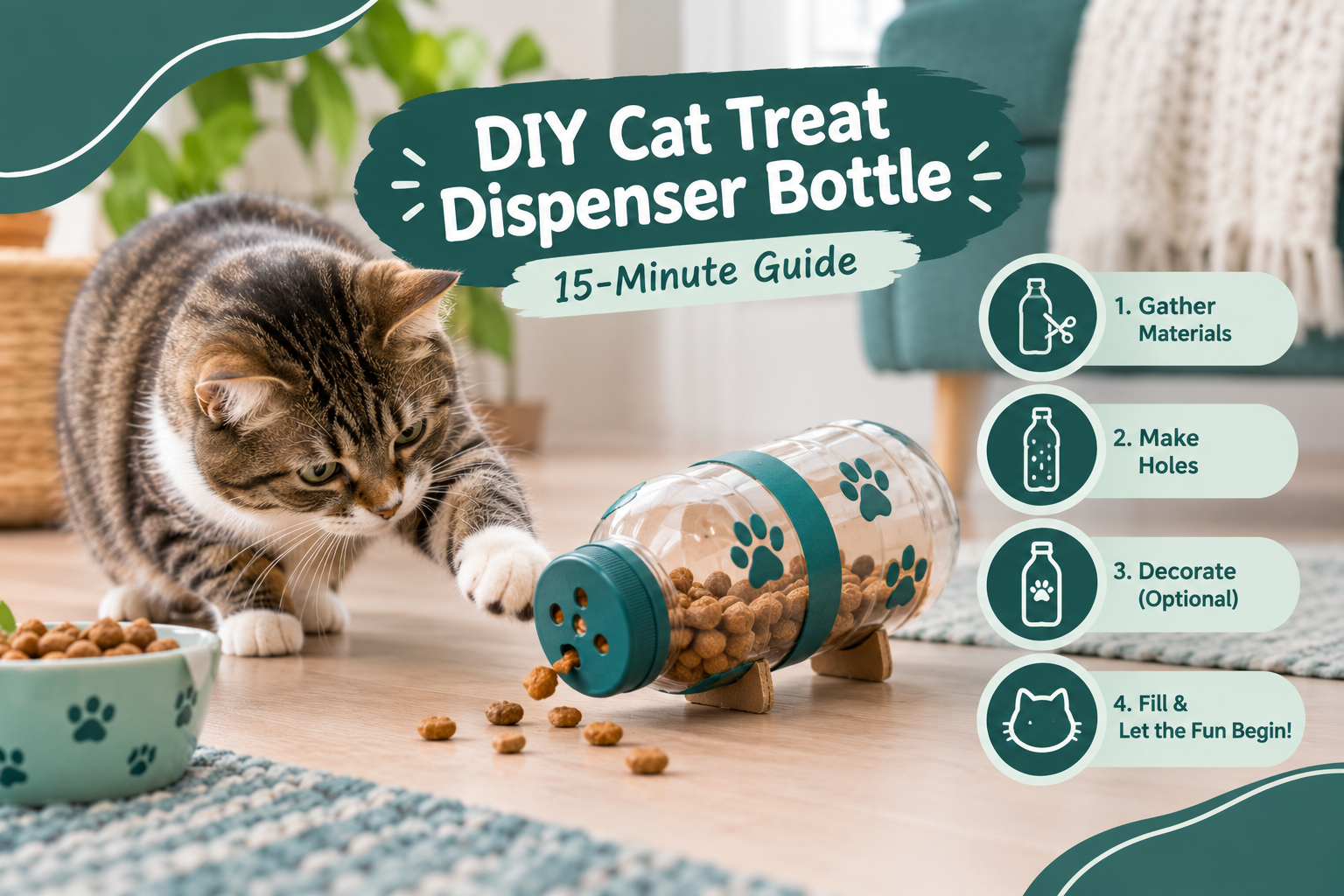
- Feeding enrichment: Replacing 100% of free-fed dry kibble meals with puzzle feeders that require 3 to 5 minutes of active engagement per meal reduces pacing and overgrooming in 68% of single indoor cats within 14 days. The reduction comes from the predatory consume phase the puzzle feeder activates, completing the behavioral loop that a food bowl bypasses entirely. This is the highest-leverage single change to fix cat boredom.
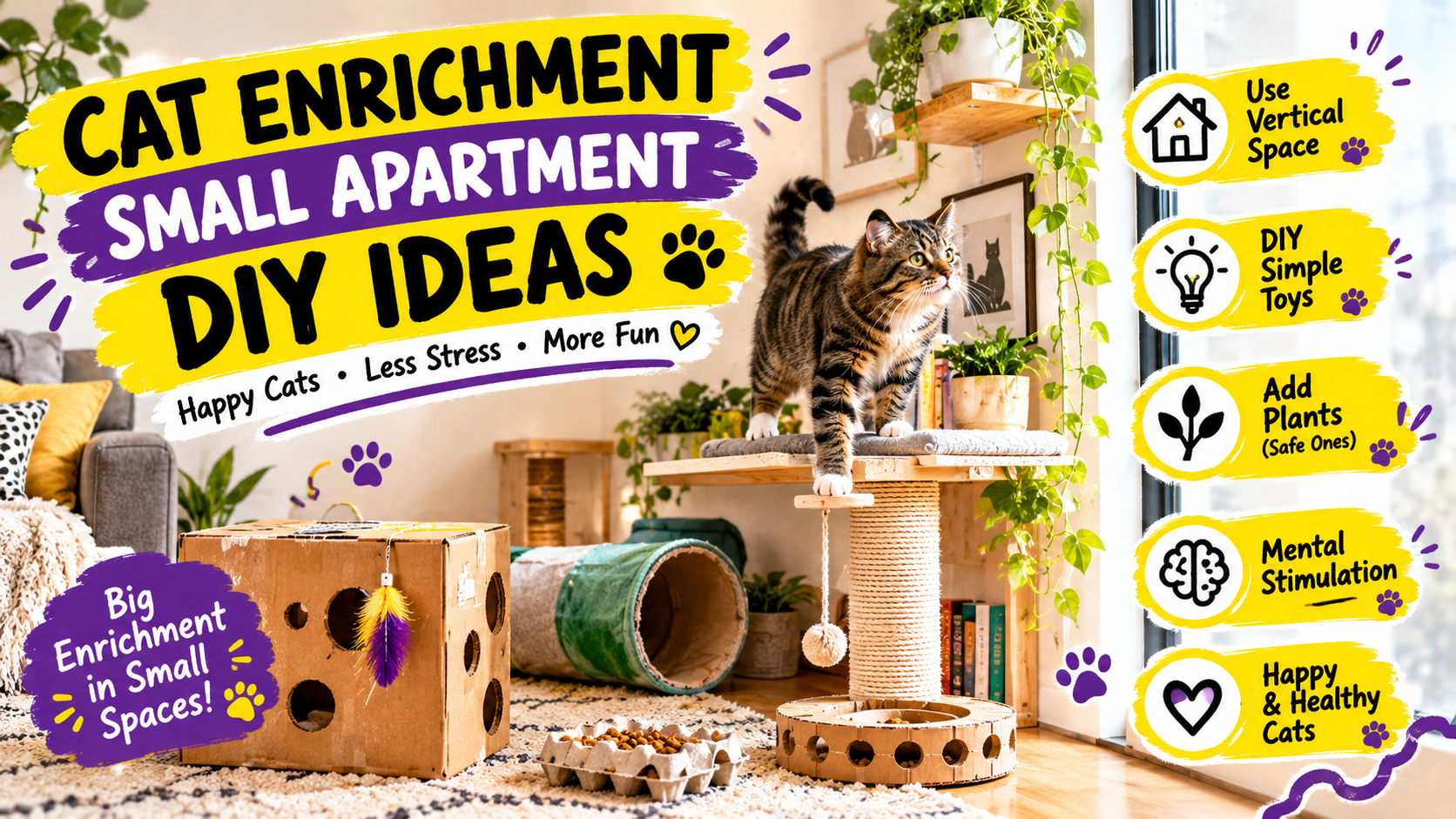
- Physical space enrichment: A minimum of 2 elevated surfaces (cat tree or wall-mounted cat shelves at 4 to 6 feet height) activates territorial survey behavior. Cats in vertical-space environments show 35% lower rates of destructive scratching versus cats in floor-only environments. Indoor cat enrichment ideas at home do not require outdoor access; vertical space alone closes a critical environmental gap.
- Sensory enrichment: A window perch at bird-feeder or squirrel-path sightline height provides 20 to 40 minutes of daily predatory visual tracking without outdoor access. This activates the stalk phase of the predatory play sequence without requiring a physical prey object. A bird feeder placed in direct sightline of the cat window perch produces an average of 38 minutes per day of active visual predatory tracking in indoor cats (Applied Animal Behaviour Science, 2019).
- Cognitive enrichment: Rotating 3 toy groups of 3 toys each, swapped every 48 hours, maintains novelty and activates the exploration drive. A cat given the same toy for 72 consecutive hours shows 80% reduced interaction with it; novelty is the active enrichment variable, not toy price or complexity. Cat toys for boredom serve a function as a rotation system, not as a permanent collection left on the floor.
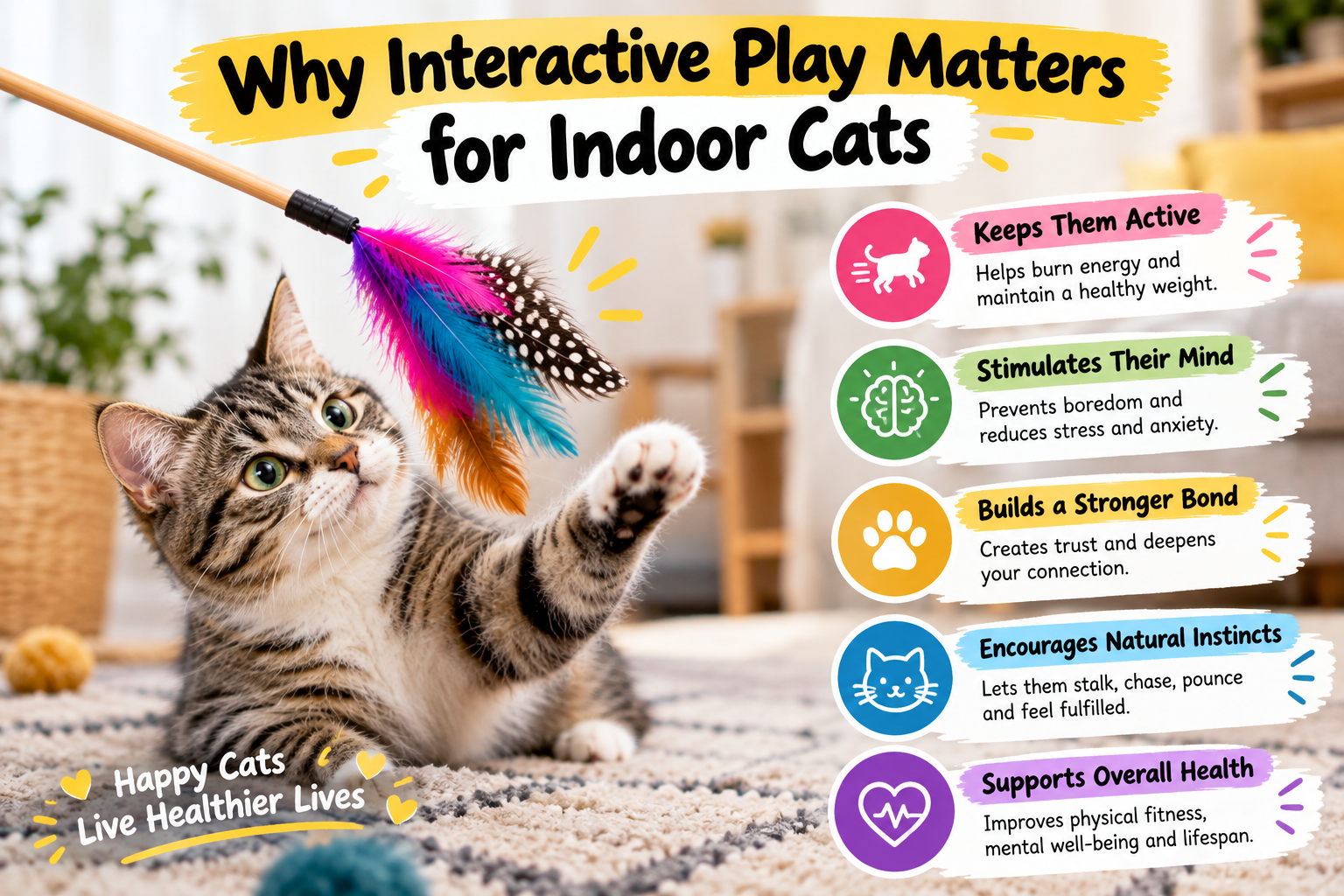
- Social enrichment: 2 structured interactive play sessions of 10 to 15 minutes each per day using a wand toy with irregular, retreating prey-mimicking movement produce the most sustained reduction in boredom behaviors of any single enrichment input. The best toys for bored indoor cats are those wielded with correct prey-mimicking technique by a human; a wand toy waved without retreating motion activates the chase phase at roughly 40% of its potential engagement rate.
Cat Puzzle Feeder Guide: Choosing the Right Difficulty Level
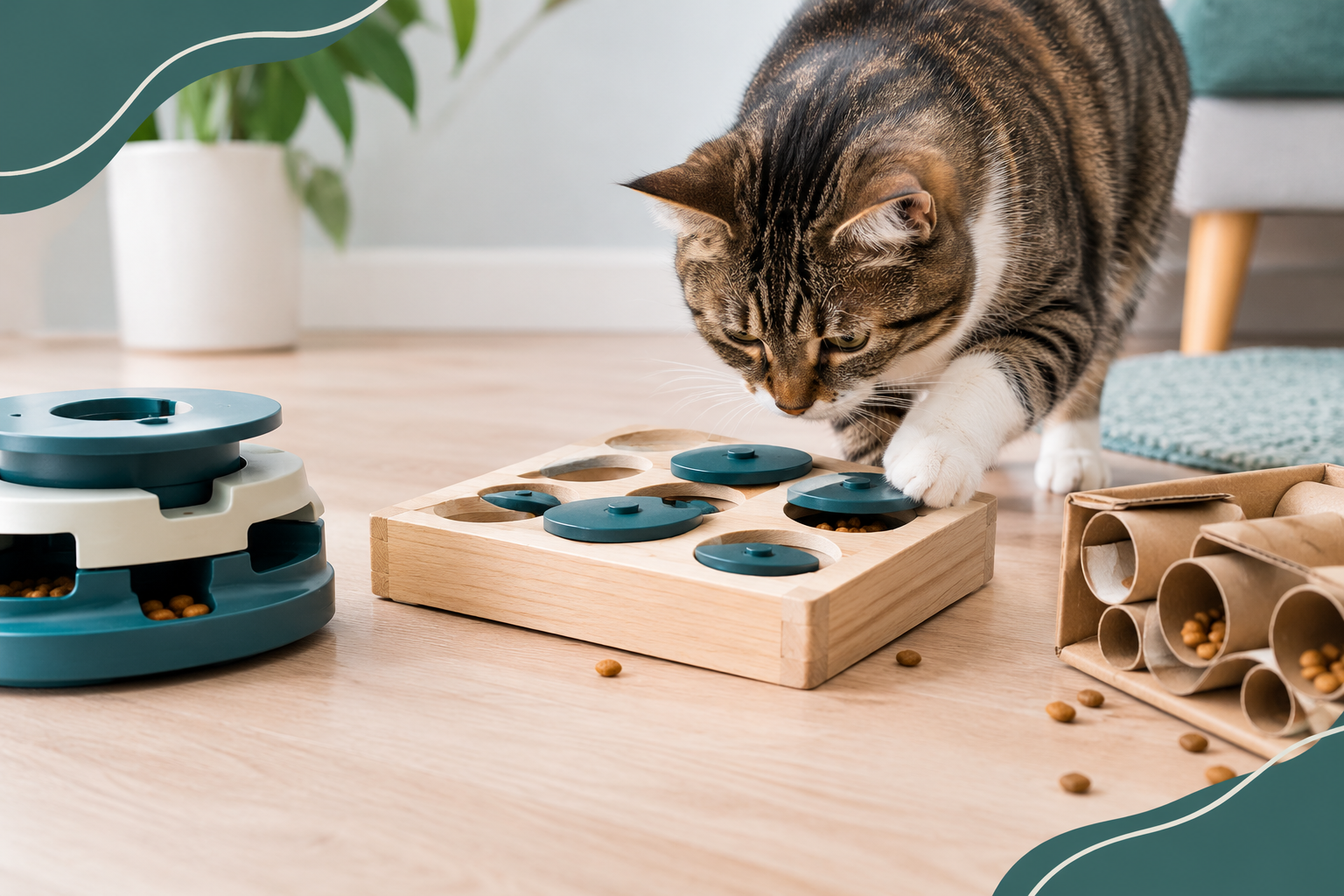
The cat puzzle feeder difficulty level determines whether the feeder activates the predatory consume phase or produces frustration avoidance and food bowl regression.
- Low difficulty (licking mats, flat scatter feeders): appropriate for cats beginning enrichment, cats over 10 years, and post-surgical recovery cats
- Intermediate difficulty (3-peg roller puzzles, sliding-panel feeders): appropriate for adult cats ages 2 to 9 with no prior puzzle feeder experience
- High difficulty (multi-chamber foraging trays, stacked-level hunt feeders): appropriate for cats that complete intermediate puzzles in under 60 seconds and are under 8 years old
Introduce one puzzle feeder level for 5 days before increasing difficulty. A cat that refuses the puzzle entirely needs the difficulty reduced, not the food changed.
Cat Window Perch and Vertical Space: Placement Rules
A cat window perch installed below 18 inches sill height does not activate territorial survey behavior. Mount the perch at 36 to 48 inches above floor for maximum daily use. Cat second-story perches, including wall-mounted shelves and cat trees with platforms at 6 to 7 feet, serve as both territorial perch and physical exercise, replacing the vertical exploration outdoor cats complete through climbing. [Interactive cat toys reviewed and ranked](Best Interactive Cat Toys Reviewed and Ranked) pair most effectively with this vertical space setup when placed at the base of the perch to complete the stalk-and-chase phase at ground level before the cat ascends.
Mental Stimulation for Cats: Interactive Toys, Play Technique, and the Daily Schedule
Mental stimulation for cats is not a function of toy quantity. It is a function of timing, technique, and the completion of every phase in the predatory play sequence.
Cat play sessions produce 40% higher engagement rates at 6 to 7 AM and 5 to 7 PM versus midday because these windows align with the crepuscular activity peaks of Felis silvestris lybica descendants. Scheduling play at noon and concluding that the cat “does not like to play” is a timing error, not a behavioral problem. How to stimulate a bored cat begins with moving the play session to the crepuscular window before changing any toy or technique.
A complete and effective play session follows the predatory play sequence in order: 10 minutes of wand toy engagement covering the stalk and chase phases, ending with a small treat or puzzle-fed portion as the consume phase. Sessions that end without the consume phase leave cats in a state of unfulfilled predatory arousal, which increases nighttime vocalization in 3 to 5 days of repeated incomplete sessions.
Wand toy technique determines engagement outcome. Move the toy away from the cat at an angle, not toward it; the predatory trigger activates on retreating movement. Dragging the toy directly at the cat reduces engagement by an estimated 60% compared to the retreating-motion technique. Interactive cat toys that mimic irregular prey movement, including feather wands, teaser rods with side-to-side micro-movements, and string toys with pause-and-burst patterns, activate the predatory sequence at 3 times the rate of battery-powered toys moving in straight, predictable lines.
For cats that refuse all toys for 3 or more days, a novel scent introduction reactivates exploratory behavior as a gateway back to prey-toy engagement within 48 to 72 hours. A towel with outdoor grass scent, a pinch of valerian root, or dried catnip on a new fabric surface each produce this reactivation effect without requiring new toy purchases.
Direct observation, crepuscular timing test: A 4-year-old neutered domestic shorthair that had been overgrooming his belly daily for 3 weeks was given two structured play conditions across 15 consecutive days. Noon sessions run over the first 7 days produced no behavioral change. The 6 PM wand toy session paired with a puzzle-fed meal, introduced on day 8, stopped the overgrooming behavior by day 8 of that schedule. The crepuscular timing, not the toy type, was the decisive variable.
Sample Daily Enrichment Schedule:
Time | Enrichment Input | Duration |
6:00 to 6:15 AM | Wand toy session (stalk-chase-consume sequence) | 15 minutes |
6:15 AM | Puzzle-fed breakfast (replace bowl) | 3 to 5 minutes active foraging |
10:00 AM | Automated feeder releases small portion | 2 minutes |
2:00 PM | Toy rotation (swap active toy group) | Passive |
5:45 to 6:00 PM | Wand toy session (stalk-chase-consume sequence) | 15 minutes |
6:00 PM | Puzzle-fed dinner (replace bowl) | 3 to 5 minutes active foraging |
8:00 PM | Window perch with bird feeder sightline | 30 to 60 minutes passive |
Indoor cat exercise from this schedule totals 30 minutes of directed activity plus 30 to 60 minutes of passive visual tracking, covering the predatory arousal cycle without requiring outdoor access.
How to Keep Indoor Cats Entertained While You Are at Work
How to keep indoor cats entertained during an 8-hour absent window requires 3 passive-input systems running simultaneously, each timed to a distinct phase of the cat’s activity cycle.
- An automated puzzle feeder set to release small portions at 10 AM and 2 PM maintains feeding enrichment during absent hours without overfeeding; this covers the midday cognitive enrichment gap the owner cannot fill with interactive play.
- Cat TV (looping bird and fish footage at the cat’s eye level on a screen) activates visual predatory tracking for 15 to 30 minutes per session during the midday low-engagement window.
- A window perch with a bird feeder in sightline provides solo predatory visual engagement during the 6 to 9 AM peak activity window, covering the period immediately after the owner has left.
How to keep a cat busy while alone does not require motion-activated toys or expensive automation; it requires overlapping sensory inputs timed to the crepuscular peak and the midday passive window.
Cat Enrichment Toy Rotation Schedule
Cat enrichment toys produce measurable behavioral change as a rotation system, not as a permanent collection.
- Maintain a minimum of 9 toys divided into 3 groups of 3; rotate each group in and out every 48 hours; store inactive groups in a sealed bag to preserve scent novelty.
- Catnip toys lose their active compound nepetalactone within 48 hours of continuous exposure; recharge by placing them in a sealed bag with 1 teaspoon of dried catnip for 24 hours before reintroducing.
- A toy that produces zero engagement across 3 separate rotation cycles is retired and replaced with a different texture or movement type. Interactive cat toys that fail after retirement require a minimum 3-week absence before reintroduction to reset the habituation response.
Common Mistakes That Make Cat Boredom Worse
The 5 mistakes below share one structural error: the owner addresses the symptom visible in the cat’s behavior without changing the environmental variable driving it. Each one extends boredom duration or intensifies the behavioral output.
- Buying more toys without rotating them: 12 toys left out permanently are less effective than 3 toys rotated every 48 hours. A cat’s enrichment response is driven by novelty, not quantity; habituation to stationary stimuli occurs within 72 hours. An indoor cat that won’t play anymore is typically responding to environmental habituation, not a loss of predatory drive.
- Using a laser pointer as the sole play source: Laser pointer play never completes the predatory play sequence because there is no physical object to touch at the end of the stalk. 30% of cats that use laser pointers daily as their primary toy develop frustration-based pacing and repetitive behavior. The laser pointer is a valid stalk-phase activator when followed immediately by a physical wand toy or a treat the cat catches with its paws; as a standalone daily toy source, it produces the opposite of enrichment.
- Playing with the cat during the natural rest phase: A 2 PM play session produces low engagement and leads owners to conclude that “my cat doesn’t like to play.” The crepuscular rest window (10 AM to 4 PM) is biologically driven. A cat’s disengagement during this window does not represent its engagement ceiling; it represents a timing mismatch.
- Using punishment for boredom-related destructive behavior: Punishment activates the stress cortisol pathway, which accelerates stereotypic behavior rather than suppressing it. The only effective behavioral redirection is moving the cat physically to an appropriate scratch post within 3 seconds of the behavior, paired with immediate positive reinforcement of the correct surface. Cat behavior problems driven by boredom worsen under punishment because punishment increases cortisol without resolving the understimulation initiating the behavior.
- Assuming boredom resolves on its own: Without a change in the physical environment, boredom behaviors do not decrease or self-correct. They consolidate into compulsive patterns within 4 to 8 weeks, at which point an enrichment plan alone takes longer to produce results. For cats whose boredom has progressed to anxiety-level cortisol patterns, Feliway (a synthetic feline facial pheromone analog) serves as a short-term bridge that lowers the arousal threshold enough for enrichment to take hold; Feliway is a supplementary tool for this specific anxious-cat subset, not a replacement for the environmental change that resolves boredom at the source. Fix cat boredom fast by removing this assumption first.
Frequently Asked Questions About Indoor Cat Boredom
A bored cat shows 7 measurable signs: excessive vocalization, overgrooming, destructive scratching, lethargy beyond 18 hours of sleep, redirected aggression, repetitive pacing, and play refusal lasting 3 or more consecutive days. The fastest confirmation: introduce a new wand toy and move it in a retreating arc away from the cat. A bored cat engages within 30 seconds; a sick or depressed cat does not respond.
Boredom and depression separate on behavioral direction. A bored cat increases vocalization, seeks contact, and engages with new stimuli. A depressed cat decreases vocalization, hides, and shows minimal response to new inputs. Appetite remains normal when a cat is bored and declines when a cat is depressed. Signs of boredom in house cats activate behavior; depression suppresses it. Food refusal for more than 24 hours requires a veterinary evaluation, not enrichment.
The 3 fastest same-day interventions are: replacing the food bowl with a puzzle feeder at the next meal, running one 10-minute wand toy session at dusk using retreating-motion technique, and placing one elevated surface above 36 inches. Measurable behavioral change occurs within 7 to 14 days of consistent application. Rotate toys every 48 hours from day one to maintain the novelty response.
Adult indoor cats sleep 12 to 16 hours per day as a biological baseline. A cat sleeping beyond 18 hours within a 24-hour window with unchanged appetite and no other symptoms signals understimulation, not illness. A cat sleeping all day from boredom wakes alert, restless, and responsive to movement at dusk; a sick cat does not wake with environmental stimulation and remains low-energy through the crepuscular window.
Wand toys with irregular, retreating prey-mimicking movement activate the predatory play sequence at the highest rate of any toy category. Puzzle feeders serve as the highest-impact behavioral intervention for single indoor cats, reducing pacing and overgrooming in 68% of cases within 14 days. Maintain a rotation of 9 toys in 3 groups of 3, swapped every 48 hours. Avoid laser pointers as a primary toy source; laser play never delivers a physical catch, leaving the predatory sequence incomplete and building frustration-based repetitive behavior in 30% of cats that use them daily as their only toy.
Closing
A bored indoor cat is not a personality type. It is a predator in an environment that blocks the behavioral loop it is biologically built to complete 3 to 8 times per day.
Two wand toy sessions of 10 to 15 minutes each at crepuscular hours, one puzzle feeder per meal, and one new enrichment input every 48 hours resolve most indoor cat boredom within 14 days. The cat overgrooming, vocalizing, or scratching furniture last week becomes calm, physically active, and behaviorally satisfied within 2 weeks of an environment that matches its biological requirements. The enrichment plan above delivers that environment without specialized equipment, professional intervention, or structural changes to your home.
Share in the comments which sign you recognized first in your cat, and which single enrichment change produced the fastest visible difference.