Quick-Answer Summary:
Cardboard, toilet paper rolls, fabric scraps, catnip, string, scissors
5 to 30 minutes
$0 to $5
DIY enrichment toys for indoor cats activate the full feline predatory sequence (stalk, chase, pounce, bite, and consume) using materials you already have at home. The American Association of Feline Practitioners (AAFP) 2022 Feline Environmental Needs Guidelines classify feline environmental enrichment as a core component of preventive healthcare, not a luxury add-on. Every toy on this list takes 30 minutes or less to build, costs under $5, and targets a specific behavioral need.
Why Mental Stimulation for Cats Is Non-Negotiable
Indoor cats that lack daily enrichment activities redirect predatory energy into destructive behaviors, including over-grooming, furniture clawing, and inter-cat aggression. Providing 3 distinct enrichment formats per day reduces stress-related behaviors in single-cat households, according to AAFP guidelines. The 15 options below cover sensory, motor, cognitive, and foraging categories so you can rotate through formats without repetition.
15 DIY Enrichment Toys for Indoor Cats
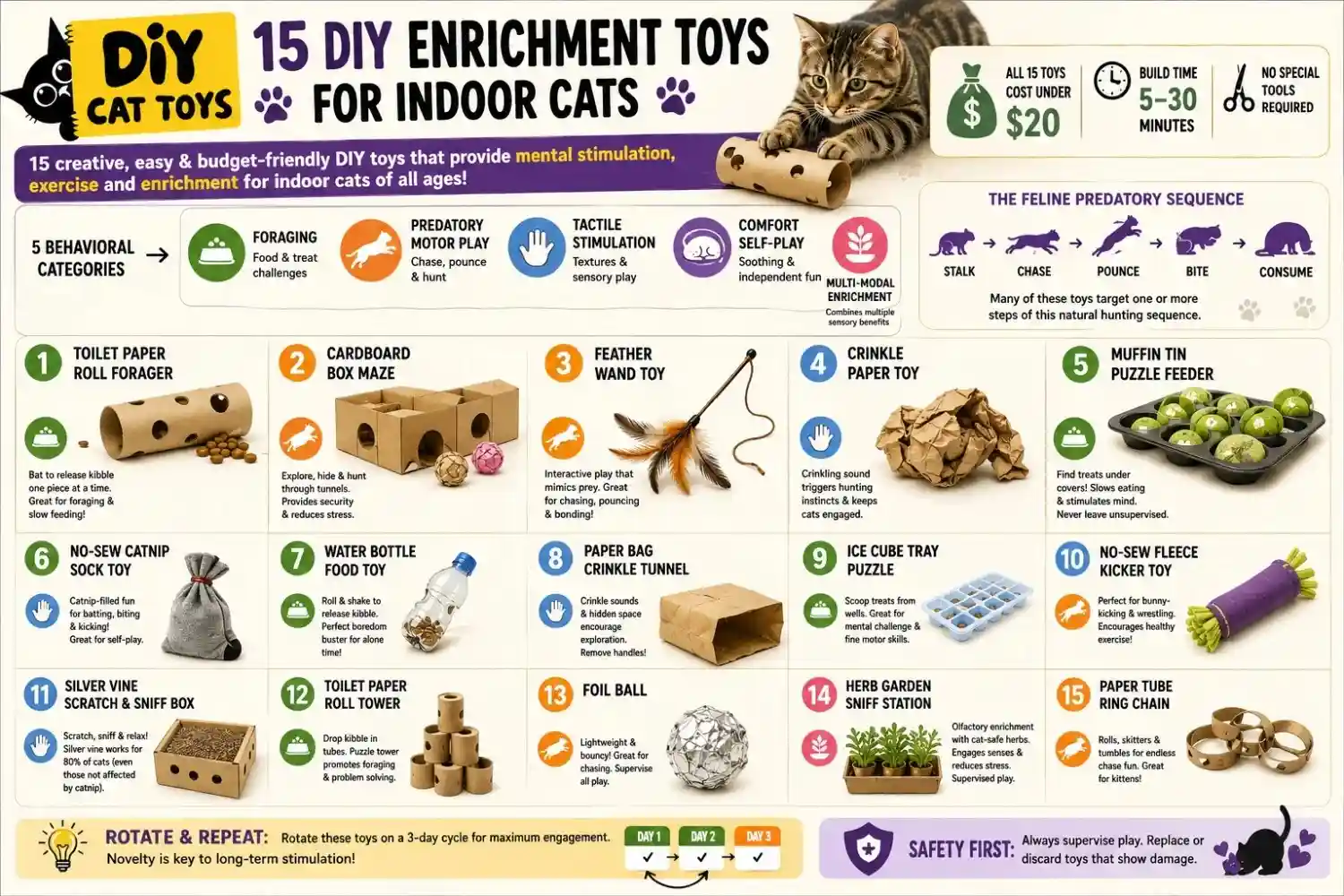
These 15 DIY enrichment toys for indoor cats span five behavioral categories: foraging, predatory motor play, tactile stimulation, comfort self-play, and multi-modal environmental enrichment. Each toy targets a distinct phase of the feline predatory sequence or a separate sensory channel, delivering complete mental stimulation for cats of every age. Building all 15 costs under $20 in total materials, requires no specialized tools, and produces reusable cat toys that outlast most commercial alternatives.
1. Toilet Paper Roll Forager (Toilet Paper Roll Cat Toy)
Materials: 2 toilet paper rolls, scissors, 10 to 15 kibble pieces or small treats.
Fold one end of each roll closed. Fill with kibble. Fold the other end shut. Cut 3 to 5 holes, 0.5 inches in diameter, along the cylinder. Place on a hard floor.
Cats bat the roll to release food one piece at a time, completing the consume phase of the predatory sequence. When we first set this out for a 2-year-old tabby named Cleo, she engaged within 40 seconds and batted it continuously for 12 minutes until the kibble ran out — which was a longer focused play session than she had ever given a commercial wand toy.
Safety note: Supervise kittens 6 months and younger. They may tear and ingest cardboard strips, which cause GI blockage in pieces larger than 1 inch.
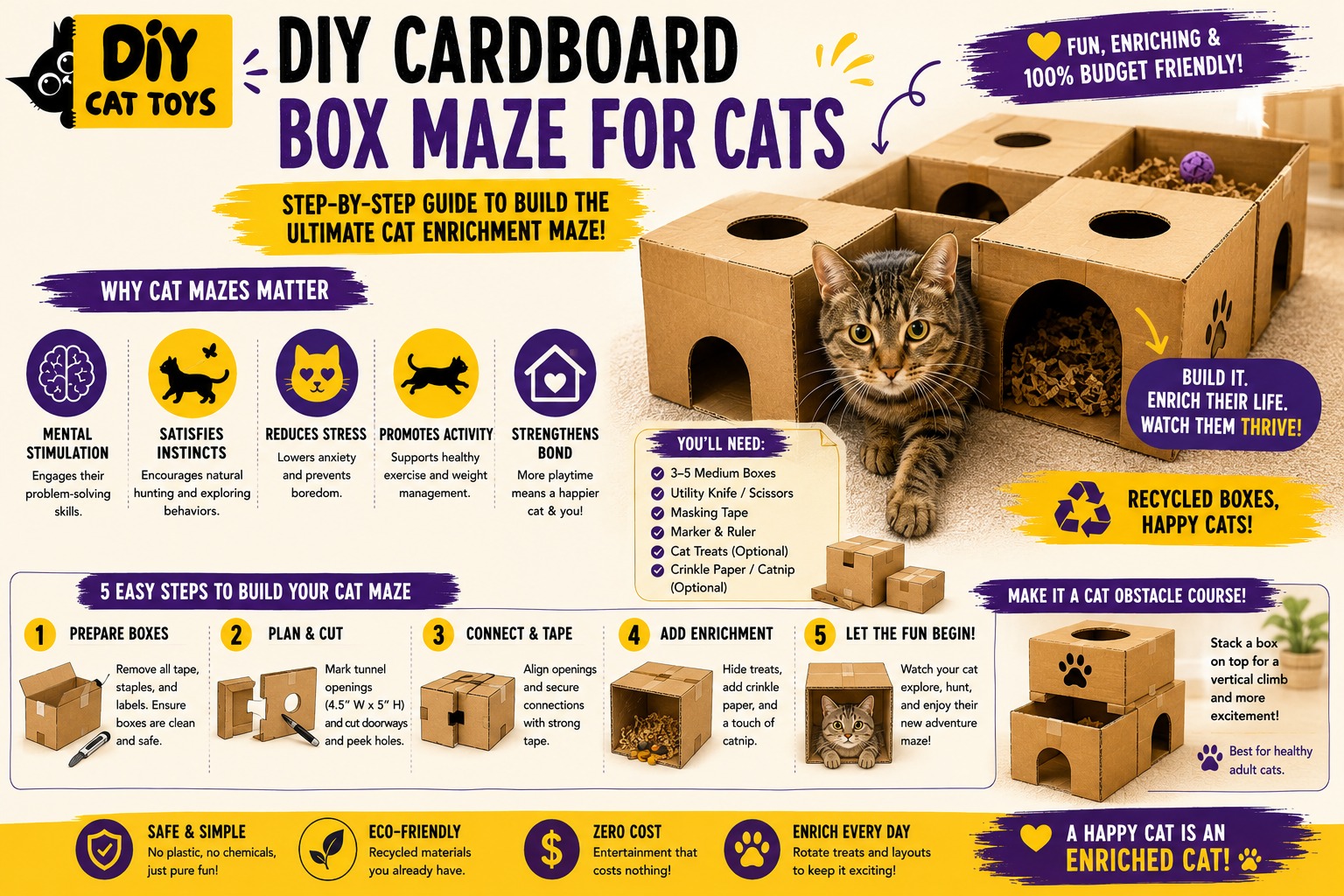
2. Cardboard Box Maze (Cardboard Cat Toys)
Materials: 3 to 5 medium cardboard boxes, packing tape, scissors.
Cut 4-by-4-inch openings in connecting walls to link boxes into a tunnel system. Tape seams at the exterior edges. Drop a crinkle paper ball or catnip sachet inside.
Cardboard mazes provide both physical cover, which is a security resource cats require for stress reduction, and active sensory exploration. Replace cardboard panels that show chewing damage, as large quantities of ingested cardboard cause GI obstruction.
3. Feather Wand Toy
Materials: 1 wooden dowel (12 inches), 18 inches of cotton twine, 3 to 5 natural feathers, tape.
Tie the twine to one end of the dowel. Knot feathers to the opposite end of the twine. Drag the wand across the floor in short, erratic, stop-and-go movements to mimic injured prey.
Interactive cat toys operated by a human generate higher arousal levels than self-play toys because they replicate the unpredictability of live prey. Use natural feathers only. Synthetic dyed feathers leach chemical dyes when chewed and should not be offered to cats.
4. Crinkle Paper Toy
Materials: 1 sheet of parchment paper or wax paper (12-by-12 inches), 0.25 teaspoons of dried catnip (optional).
Sprinkle catnip into the center of the sheet before crumpling. Crumple into a loose 2-inch ball. The crinkling sound activates the auditory hunting response linked to the sound of small prey moving through dry leaves.
Replace each crinkle paper toy after 3 play sessions. The texture flattens after repeated batting and loses stimulation value.
5. Muffin Tin Puzzle Feeder (DIY Treat Puzzle)
Materials: 1 standard 12-cup muffin tin, 12 tennis balls or crumpled paper wads, 12 small treats.
Place 1 treat in each cup. Cover each cup with a ball or paper wad. Set on the floor for the cat to uncover.
This homemade cat puzzle feeder slows eating in cats that finish meals in under 90 seconds and reduces post-meal vomiting in those individuals. Do not leave this unsupervised with cats diagnosed with pica (compulsive object ingestion).
6. No-Sew Catnip Stuffed Sock Toy (No-Sew Cat Toys / Catnip Stuffed Toys)
Materials: 1 clean cotton ankle sock, 2 tablespoons of dried catnip, 1 rubber band.
Spoon catnip into the sock. Twist the open end and secure with the rubber band 1 inch from the top.
Catnip (Nepeta cataria) triggers a neurological response in 50 to 65 percent of cats, according to veterinary internist Dr. Tony Buffington of UC Davis, who has published extensively on feline environmental enrichment. Cats under 6 months of age rarely respond to catnip, as the relevant receptor sensitivity develops after that developmental stage.
7. Water Bottle Food Dispensing Toy (Food Dispensing Toys)
Materials: 1 clean 16-oz plastic water bottle, scissors or hole punch, 20 to 30 pieces of dry kibble.
Punch 4 to 6 holes, 0.25 inches in diameter, around the bottle’s midsection. Replace the cap. Fill with kibble.
The cat rolls the bottle to release food one piece at a time, making this one of the most effective boredom buster toys for cats left home alone for more than 4 hours. Discard the bottle when surface cracks appear, as sharp plastic edges cut gum tissue.
8. Paper Bag Crinkle Tunnel
Materials: 1 large paper grocery bag, scissors.
Cut both closed ends off the bag to create a tunnel 12 to 16 inches long. Fold the cut edges inward 0.5 inches to remove sharp paper edges.
Paper bags generate crinkle sounds on contact, triggering investigative behavior. Remove all handles before use. Looped handles catch around a cat’s neck and cause strangulation.
9. Ice Cube Tray Puzzle (Puzzle Toys for Cats)
Materials: 1 standard 16-cube ice tray, small treats or wet food.
Place 1 treat or 0.5 teaspoons of wet food in each cavity. For wet food, freeze for 15 minutes before offering.
Ice cube tray puzzles target fine motor coordination as the cat scoops food from narrow wells. Frozen wet food formats are particularly effective for cats recovering from dental extractions, as cold food reduces oral tissue inflammation during the 48-hour post-procedure window.
10. No-Sew Fleece Kicker Toy (No-Sew Cat Toys)
Materials: 2 fleece strips (10 inches by 3 inches each), 1 tablespoon of dried catnip, 1 rubber band.
Stack both strips. Tie a knot at each end, leaving 1-inch fringe. Tuck catnip into the center of the bundle and secure loosely with the rubber band.
The elongated shape invites bunny-kicking behavior, which exercises the hind leg muscles cats use during prey capture. Adult cats over 1 year engage with kicker toys for an average of 8 to 14 minutes before interest wanes.
11. Silver Vine Scratch and Sniff Box (Sensory Play for Cats)
Materials: 1 shoebox, corrugated cardboard scraps, 1 tablespoon of dried silver vine or catnip.
Cut cardboard strips to the height of the box. Pack strips vertically, filling the box. Sprinkle dried herb between the layers.
Silver vine (Actinidia polygama) triggers a neurological response in 80 percent of cats, including individuals that do not respond to catnip, according to a 2017 peer-reviewed study published in BMC Veterinary Research. This toy functions simultaneously as a scratch surface and a scent enrichment station, providing two enrichment modalities from one inexpensive cat toy.
12. Toilet Paper Roll Tower (Homemade Cat Puzzle Feeder)
Materials: 7 toilet paper rolls, hot glue gun, 20 kibble pieces.
Glue 3 rolls in a horizontal row. Glue 2 rolls on top, then 2 more in a pyramid shape. Allow 5 minutes to cure fully before use. Drop kibble into the top openings.
Hot glue is non-toxic once fully cured (approximately 2 minutes after application). Do not offer this toy while the glue is still liquid or tacky.
13. Foil Ball (Inexpensive Cat Toys / Easy Cat Toy Ideas)
Materials: 1 sheet of standard aluminum foil, 12 inches square.
Crumple the sheet into a tight 1.5-inch sphere.
Foil balls roll unpredictably on hard floors, sustaining chase interest for 5 to 10 minutes per session. Discard after 2 play sessions, as the foil loosens and sheds fragments.
Safety note: Supervise all foil play. Ingested foil pieces larger than 0.5 inches cause intestinal blockage and require emergency veterinary care.
14. Herb Garden Sniff Station (Kitten Enrichment Activities / Enrichment Activities for Indoor Cats)
Materials: 1 shallow cardboard tray (6 by 9 inches), 3 to 4 small pots of cat-safe herbs (catnip, valerian, lemon thyme).
Arrange the pots inside the tray. Offer during supervised 10-minute enrichment sessions on the floor.
Olfactory stimulation through live plants engages a sensory channel distinct from visual or auditory play, creating multi-modal feline environmental enrichment in one setup. Verify all plants are non-toxic before offering by checking the ASPCA Animal Poison Control Center plant database at aspca.org.
15. Paper Tube Ring Chain (Household Items for Cat Toys)
Materials: 4 toilet paper rolls, scissors.
Cut each roll into 4 rings, approximately 0.75 inches wide. Interlock 3 to 4 rings into a chain.
The chain skitters and tumbles unpredictably on hard floors, sustaining predatory interest through irregular movement. Kittens between 8 and 16 weeks show the highest engagement with this format because this developmental window represents peak predatory play sensitivity in domestic cats.
The Most Important Takeaway for Stimulating Indoor Cats Long-Term
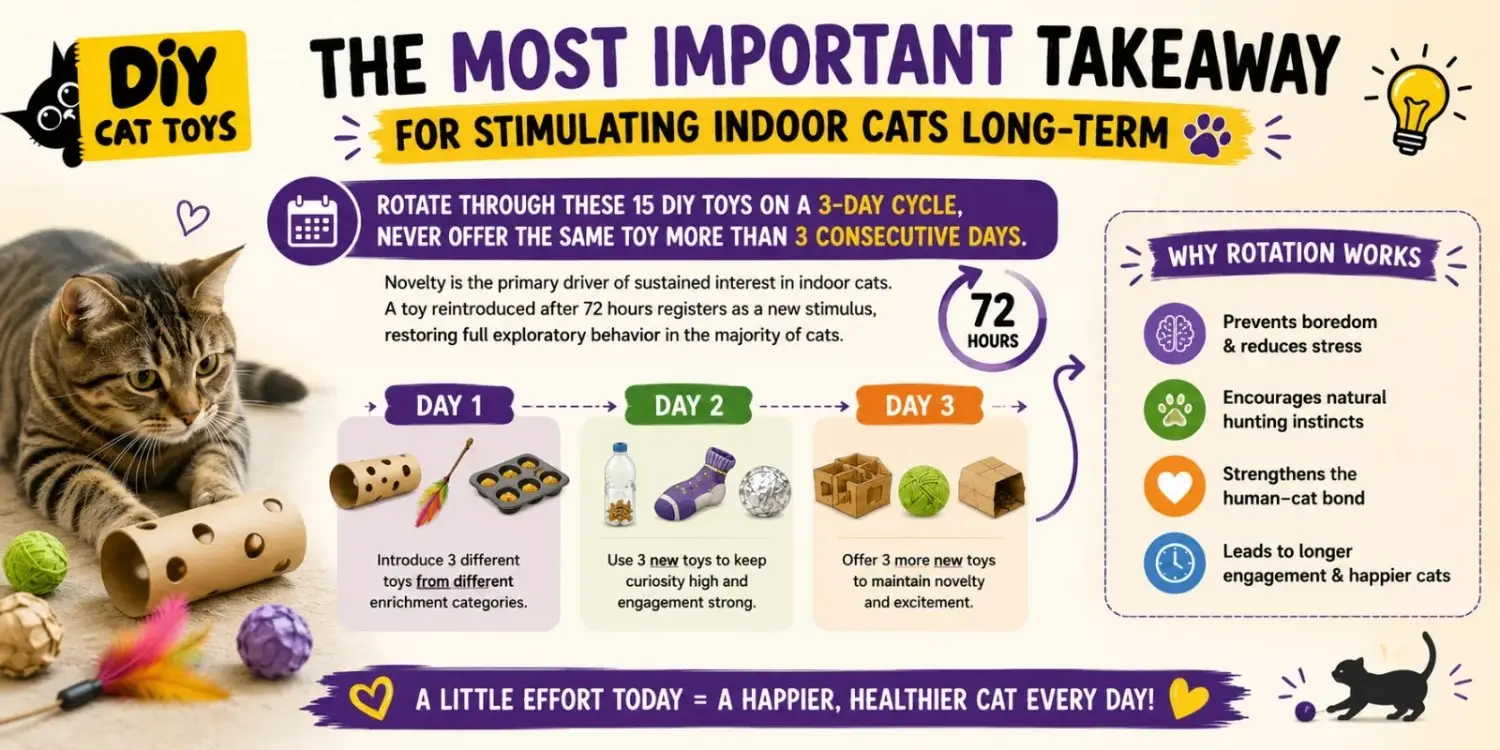
Rotating through these 15 toys on a 3-day cycle, never offering the same toy more than 3 consecutive days in a row, produces longer engagement sessions than any single toy offered indefinitely. Novelty is the primary driver of sustained interest in indoor cats, and a toy reintroduced after 72 hours registers as a new stimulus, restoring full exploratory behavior in the majority of cats.