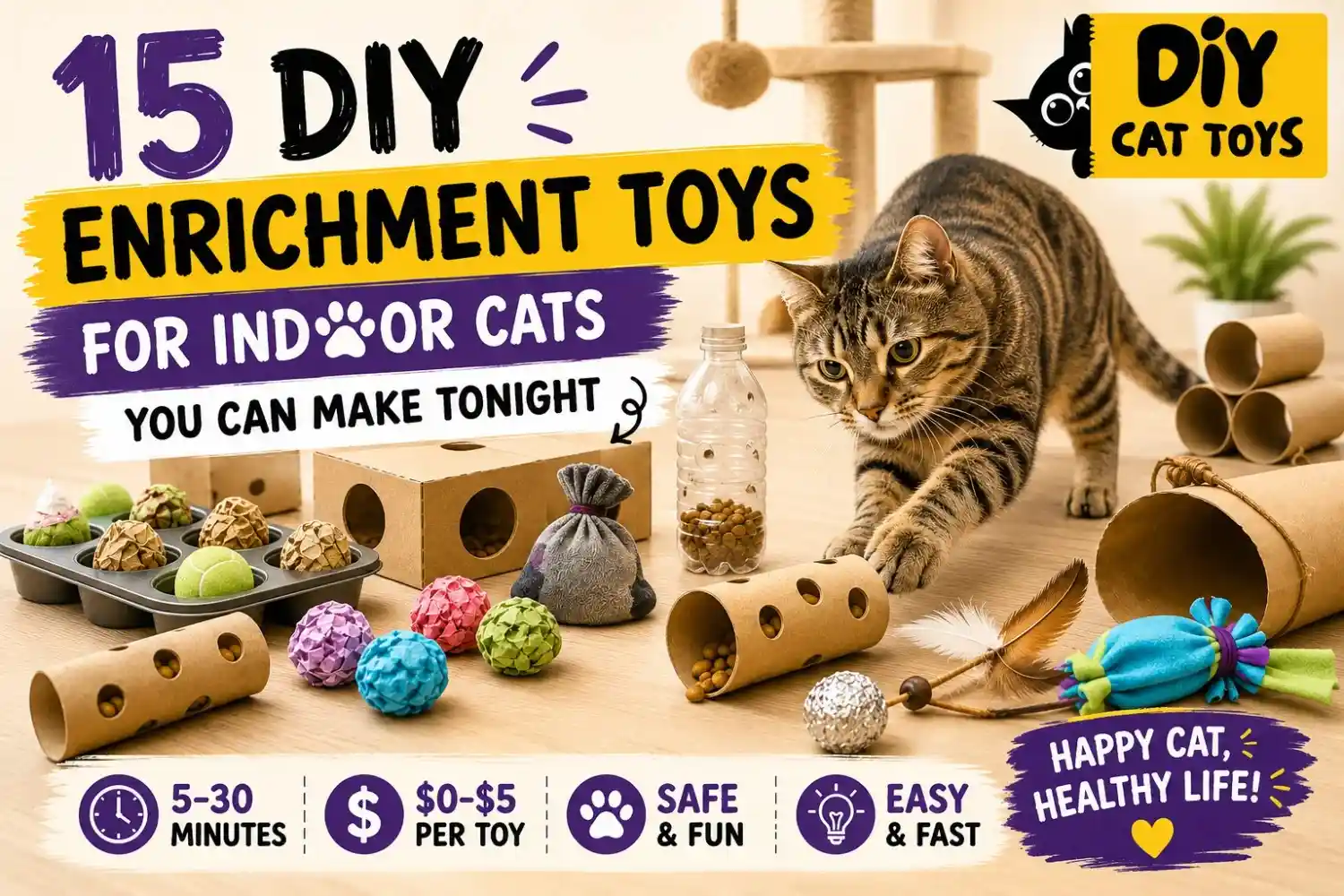
A standard 12-cup muffin tin becomes a functional DIY puzzle feeder for cats in under 5 minutes. Load 1 to 2 teaspoons of dry kibble or freeze-dried treats into 4 to 6 of the 12 cups, cover every cup with a tennis ball, and set the tin on a non-slip mat for your cat to paw and nose the balls away to reach the food. No tools, adhesives, or crafting experience are required.
Detail | Specification |
Build time | 3 minutes |
Cost | Under $5.00 (with tin on hand); under $12.00 from scratch |
Difficulty level | Beginner |
Recommended age | 6 months and older |
Session duration | 4 to 15 minutes per meal |
Cleaning frequency | Every 3 dry-kibble sessions; after every wet-food session |
Materials for Your Homemade Cat Puzzle Feeder
- 1 standard 12-cup metal or silicone muffin tin (BPA-free silicone or uncoated stainless steel preferred)
- 6 to 12 standard-size tennis balls (2.57 inches diameter)
- 1/4 cup dry kibble or freeze-dried single-ingredient treats
- 1 rubber-backed non-slip mat or damp kitchen towel
- Dish soap and warm water for post-session cleaning
Do not use: Muffin tins with scratched, flaking, or peeling nonstick coating. Degraded PTFE (polytetrafluoroethylene) releases particles that are harmful if ingested. Stainless steel and food-grade silicone tins carry zero coating-degradation risk and are the safest material choices for any safe DIY cat feeder.
Why a DIY Puzzle Feeder Activates Cat Hunting Instincts
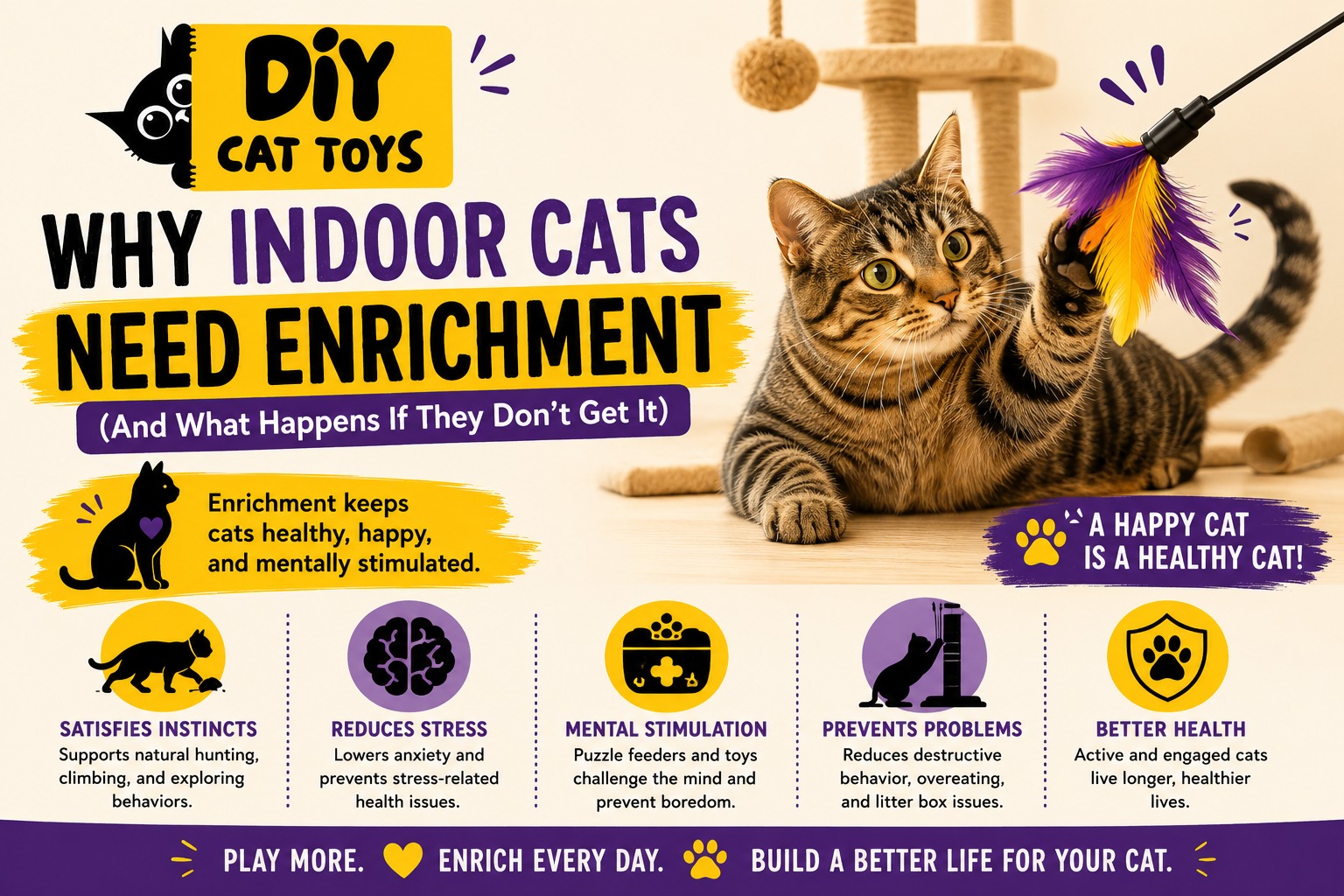
Indoor cats receive their full caloric intake from a bowl in under 60 seconds, eliminating the seek-stalk-pounce-catch phases that precede eating in the wild. This compression of the predatory sequence is directly linked to boredom-related behaviors including over-grooming, redirected aggression, and nighttime vocalization in adult cats living exclusively indoors.
The American Association of Feline Practitioners (AAFP) classifies food puzzles as a primary tool for feline environmental enrichment, stating in its 2022 Feline Environmental Needs Guidelines that interactive cat feeding addresses the behavioral needs that static bowl feeding cannot meet. The muffin tin format restores the seek-and-catch phases of the predatory sequence without requiring live prey or battery-powered components.
Research published in Applied Animal Behaviour Science (Naik et al., 2018) found that cats introduced to food-dispensing toys and food enrichment for cats over an 8-week period showed measurable reductions in stress indicators compared to cats fed exclusively from standard bowls. The muffin tin puzzle feeder for cats replicates the core mechanics of those interventions using a household item that most US pet owners already own.
Step-by-Step Instructions: Building the Muffin Tin Cat Toy
Step 1: Wash the Tin Before the First Use
Wash the muffin tin with dish soap and hot water. Rinse for 30 seconds and dry completely before loading food. Residual baking odors compete with the kibble scent during the first session and reduce initial engagement for most cats.
Step 2: Load 4 to 6 Cups with Food
Add exactly 1 teaspoon of dry kibble or treats into each of 6 cups. Leave the remaining 6 cups empty. Load different cups each session. Cats habituate to fixed food-location patterns within 3 to 5 sessions, and rotating cup positions sustains the foraging activity value over weeks of repeated use.
Step 3: Cover Every Cup with a Tennis Ball
Place one tennis ball over each of the 12 cups, including the empty ones. Covering empty cups requires the cat to investigate every position, which extends the cat foraging activity from 2 to 3 minutes (if only loaded cups are covered) to 8 to 15 minutes for a 12-ball setup.
Step 4: Set the Tin on a Non-Slip Surface
Place the loaded muffin tin on a rubber-backed mat or a damp kitchen towel. Tile and hardwood floors allow the tin to slide when the cat paws it, which causes most cats to disengage within 60 seconds. A stable surface keeps the DIY cat enrichment feeder stationary so the cat can exert consistent paw pressure on the tennis balls.
Step 5: Introduce the Feeder Correctly
Set the cat within 12 inches of the feeder. For cats encountering a puzzle feeder for the first time, remove one tennis ball before the session begins and expose the kibble in that cup. This first-session modification teaches the cause-and-effect relationship between moving a ball and finding food. Remove the scaffold modification by session 3, once the cat demonstrates consistent ball-removal behavior.
Safety Information: Supervision and Material Checks
SAFETY NOTE
Supervise all sessions for: kittens under 6 months of age, cats weighing under 5 lbs, and cats with known dental or jaw conditions. Tennis balls present a low choking risk for healthy adult cats in the standard 8 to 12 lb weight range, but the risk increases with smaller body size.
Inspect each tennis ball before every session. Discard any ball with visible tears, separated seams, or loose fuzz that detaches under light hand pressure. Do not substitute rubber balls smaller than 1.75 inches in diameter.
Do not use wet canned food as a treat puzzle reward for sessions longer than 30 minutes. Wet food in an uncovered cup develops bacterial growth above safe levels (more than 1 x 10^5 CFU/g) within 30 to 60 minutes at room temperature, according to standard pet food safety guidelines from the FDA Center for Veterinary Medicine.
Increasing Difficulty for Cats That Master the Basic Setup
Switch from Tennis Balls to Golf Balls
Cats that clear the 12-ball setup in under 90 seconds have outgrown the base configuration. Golf balls (1.68 inches diameter) fit inside muffin tin cups with less clearance, require greater paw-force precision to dislodge, and extend average session time to 6 to 10 minutes for cats experienced with the tennis-ball version. Confirm that the cat is at least 8 lbs before introducing golf balls to prevent the choking risk described above.
Rotate Between Dry Kibble and Freeze-Dried Treats
Add 1/4 teaspoon of a freeze-dried protein treat (single-ingredient, no added salt or flavorings) into 2 of the 12 cups per session. High-value rewards placed unpredictably across the 12-cup grid introduce variable-ratio reinforcement, which is the reward schedule that sustains the highest rate of engagement in feline behavioral research.
Add a Second Layer for Advanced Mental Stimulation for Cats
Place a second muffin tin upside-down on top of the loaded base tin. Use a 3/4-inch hole saw to drill 1-inch holes through the bottom of the inverted top tin before stacking. Kibble is partially visible through the holes, which engages the olfactory and visual senses simultaneously and targets sensory enrichment for cats beyond what the single-layer version provides.
First-Hand Observation: Session Behavior in Practice
During the first test session with a 4-year-old domestic shorthair, the tennis balls commanded more attention than the food for the first 3 minutes. He batted 4 balls out of the tin before sniffing the exposed cup and eating the kibble inside it. By session 4, the same cat moved directly to the cups, applied deliberate downward paw pressure to dislodge the balls, and cleared all 6 loaded cups in under 5 minutes. The behavioral shift from object play to goal-directed foraging appeared between session 3 and session 4, which aligns with the learning-curve timeline reported in cat food puzzle research by Dr. Mikel Delgado and colleagues at the University of California, Davis School of Veterinary Medicine.
Cleaning and Reuse: Maintaining Your Reusable Cat Enrichment Toy
Wash the muffin tin with dish soap and hot water after every wet-food session. For dry-kibble-only sessions, clean every 3 uses. Muffin tins accumulate saliva, skin oils, and food residue that generate bacterial growth and alter the feeder’s scent profile. A freshly washed tin reads as a novel enrichment object to the cat’s olfactory system and sustains interest across sessions without requiring new materials.
Tennis balls tolerate hand-washing in dish soap and warm water. Air-dry for 2 hours before reuse. Replace tennis balls every 90 days or when surface fuzz degrades and ball texture becomes smooth, as surface texture contributes to the tactile engagement that makes this inexpensive cat enrichment tool effective.
Frequently Asked Questions
A muffin tin puzzle feeder extends meal duration from an average of 45 seconds at a standard bowl to 4 to 12 minutes, which reduces the mechanical cause of post-meal regurgitation in cats that eat too quickly. Cats that regurgitate regularly despite puzzle feeding warrant a veterinary evaluation to rule out gastrointestinal conditions unrelated to eating speed.
Silicone muffin tins are safe and carry no coating-degradation risk. The lighter weight causes the tin to shift on smooth surfaces, so a non-slip mat is especially important with silicone versions. Silicone also retains food odors between sessions more than metal does, which can reduce novelty over time. Washing in hot soapy water after every session addresses odor retention in silicone tins.
Replace 1 to 2 standard bowl meals per day with a muffin tin puzzle feeder session. International Cat Care recommends daily food puzzle use as a core component of a complete feline environmental enrichment program, alongside vertical space, scratching surfaces, and scheduled interactive play.
Feed each cat separately using individual muffin tins in different rooms. Multi-cat puzzle feeding at a shared tin generates resource-guarding behavior in cats with hierarchical tension and eliminates the individual foraging benefit that makes this cat food game effective.
The muffin tin puzzle feeder produces the highest enrichment return of any household-item cat toy: it costs under $5.00 to build, requires 3 minutes to assemble, and extends the feline predatory sequence from the single-phase “eat” step of bowl feeding to a multi-phase foraging and problem-solving activity that lasts 4 to 15 minutes per session with no batteries, replacement parts, or recurring expense.